Tags
1970s television movies, 1972 TV movies, ageism, classic horror, Film Chat Radio, Film Chat With Erin, film criticism, horror film discussion, horror movies, made for TV movies, movie discussion, Moxey Bluff, Olivia de Havilland, Ray Bradbury, television horror, The Screaming Woman, WFCE Film Chat Radio, women in horror
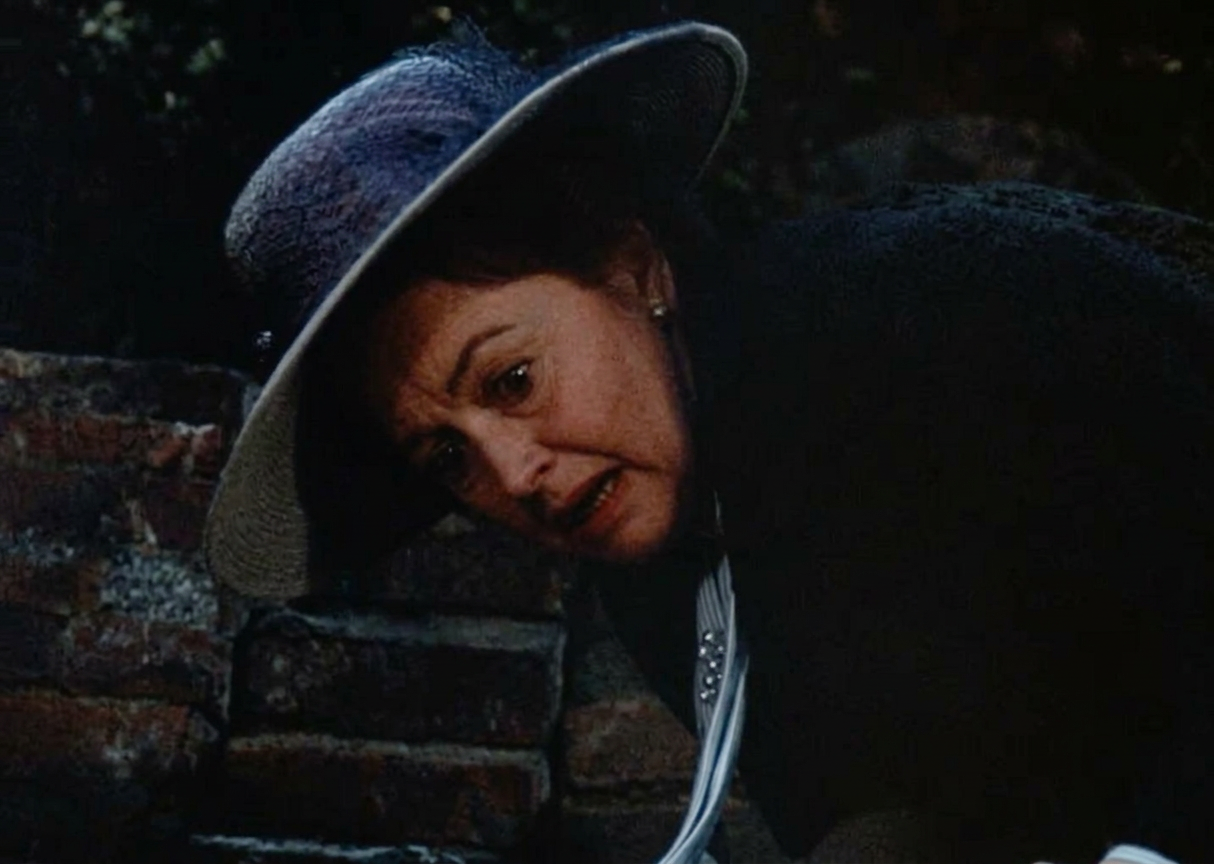
In this episode of Film Chat Radio, I take a look at the 1972 television movie The Screaming Woman, starring Olivia de Havilland, and the strange mixture of ageism, class, and irony at the heart of its story. Along the way, a listener email sends the conversation somewhere I didn’t expect, and my thoughts about this very 1970s movie somehow lead me to a 21st-century zombie film. The video is followed by a transcript of the episode.
Good evening, you’re listening to Film Chat With Erin in Moxey Bluff Georgia here on WFCE, Film Chat Radio, where we always catch the late show. Tonight we’re looking at ageism and irony in the 1972 TV movie The Screaming Woman, from a story by Ray Bradbury and starring Olivia De Havilland. And I’ll tell you the surprising connection my brain made between this classy 70s movie and a 21st century zombie movie. But first, an email from our listener, Fluffy.
Dear Erin,
I usually enjoy listening to your show while I rearrange the area rugs. But I couldn’t help but feel offended by your coverage of The Cat Creature.
A cat killed a tarot card reading lesbian over an Egyptian artifact? Cats are strong supporters of the LGBT community. And we were worshipped in ancient Egypt, so would have no logical reason to kill over a mere bauble when our status is as solid as the bricks in the pyramids built in our honor.
Cats are the most logical creatures on earth,
and also the most humble.
Why don’t you try analyzing a movie about a dog?
Can’t wait to hear your next hot take!
Fluffy
Fluffy, you’re in luck because there’s a dog in The Screaming Woman who is central to the plot. Olivia De Havilland plays a rich woman who just got home from the mental hospital, and she takes a ride in her horse drawn carriage and remember this is 1972 so already she’s seen as odd by the neighhh-bors for that. But when a dog starts digging in the former basement of her burned down smokehouse, she realizes there’s a woman buried there and she’s still alive. However, being the classic unreliable narrator, she can’t find anyone to believe her. They either think she’s insane, or they think she’s a bitch because she didn’t want to sell her land to build a subdivision ( in the case of the neighbors) or they think she’ s a bitch and they’re going to have her declared insane SO they can sell the rest of her land to build another subdivision, in the case of her cartoonishly evil daughter in law. OR, they’re the very person who buried the very real and not quite dead woman. And she’s next.
So, we had a lot going on in entertainment and society in the 70s. TV was considered less than, and yet it was elevated by golden age stars like De Havilland who made these prime time TV events. But we can’t fool ourselves into thinking that age had nothing to do with why these actresses were moving into television. A lot of them had aged out of traditional leading roles. And then they went and created this whole new art form, the TV movie, with their classic charisma. Another layer of that is that Olivia’s character was being pushed aside for her age in the movie, steamrolled by her daughter in law who was trying to prove that she was past it, and half of the people who wouldn’t help her ya know dig up the almost dead body of their neighbor were against her because she was “old.” Guess how old? Freaking 56 years old. The Crypt Keeper. The same age as a person who was born in 1970 as I speak. The same age as Matt Damon and Tina Fey now, and I don’t think of them as past it.
What about the irony? Well, there’s dramatic irony here, which is my least favorite kind of irony. The kind where we the audience know the protagonist really does see a person buried in the ground, and no one actually in the movie believes them except the dog and the killer. I feel it’s a cheap way to build tension, and I almost turned off the movie because I was frustrated. But then I noticed the situational irony and I got interested again. We’re not supposed to like De Havilland’s character in theory. She’s rich and doesn’t want affordable housing built in her area. But she’s just about the only person in the movie who isn’t cruel and apathetic and jaded. We’re normally supposed to be on the side of the middle class people in the subdivision. I’m personally always in need of a reminder that you don’t know what type of person anyone is based on assumptions. Your neighbor might have just buried his wife in the basement, even though he plays golf I guess. I don’t know why this type of irony is in the movie, I just know I noticed it.
Let’s take a short break from the class war for a quick word from our sponsor, Wanda Worthington from Walla Walla Washington.
Dear Erin and company,
Wanda Worthington here and I got two quick words: Shadow People.
Don’t you hate it when you try to keep your house clean and free from pests, but then you get shadow people? They’re so hard to get rid of, and they mostly come out at night when you’re trying to sleep. I love scary movies as much as the next person, but I don’t like ‘em coming out of the closet and scaring my kids.
That’s why I use Shadoway Sage Scented Spray. Just a few spritzes of Shadoway keeps the Hat Man at bay. Shadoway is found wherever fine potions are sold, or you can order direct from me, Wanda Worthington in Walla Walla Washington using the code Dear Erin, that’s dearerin.
Shadoway! Ask for it by name! No C.O.D.s
Thanks Wanda! Now back to the film.
By trying to save the woman, she’s literally saving herself, because people in her life are figuratively trying to bury her before her time, bury her alive, and they’re planning to use this delusion that isn’t a delusion to put her away. I love the look of triumph on her face when she is proven right, she saves the woman, and she says, “It was her who saved me.” Because while she was reaching down to save the buried woman, that woman was reaching up to her. Keep reaching up, just like we learned in that 21st century zombie movie Planet Terror. When you don’t know what to do, reach up. Keep reaching up. Keep reaching down. Find some hope in a terrible world. That made The Screaming Woman worth watching for me, and I’m glad I didn’t turn it off. I almost wish this had been Olivia De Havilland’s final film role because of that last shot of her face, it would have been the perfect way to go out, but then we wouldn’t have witnessed her catfighting with Lesley Anne Down in Murder Is Easy in the 80s, and that would have been a real shame, apologies to Fluffy.
Until next time, thanks for tuning in to Film Chat With Erin on Film Chat Radio, WFCE broadcasting from Moxey Bluff, Georgia. We watch films, so we have something to talk about. Goodnight!


I love it! But, a horse drawn carriage in 1972? I say! That would seem a little pretentious to me too, subdivision or not. Although! In 1972 I was one so I don’t remember everything that well – maybe they were more common than I think. I know there’s a story my grandpa used to like to tell of us going to this amusement park and I got on a small horse and fell off into a pile of horse poop. Maybe there’s a common link to all of this.
LikeLiked by 1 person
It is very ridiculous because it’s not even explained why she has this little horse drawn buggy and then she runs home without the horse.
Did you ever ride a horse again after the amusement park incident?
LikeLiked by 1 person
The rich! Always squandering resources!
Yes – I’m not afraid of the horse. My uncle had one and we used to go riding with him a lot back when I was a teenager. I might be afraid to go riding now, not because of the horse but because I’m old and if I fell from that height I might never get up again.
LikeLiked by 1 person
Another review we have in common, this is a great film and didn’t realise (or work out) how young Olivia DeHavilland was… love how they adapted this Ray Bradbury story, and great to see Olivia with Joseph Cotten again.
LikeLiked by 1 person
They were acting like she was 90 years old and I had to check her real age!
LikeLiked by 1 person